Curriculum
Smart4Food MicroLearning Course
INTRODUCTION
0/1
Module 1: Digital Tools for Smart Farming
0/22
-
MODULE 1 - INFORMATION
 Trial
-
MODULE 1 - INTRODUCTION
Trial
-
UNIT 1 - INTRODUCTION TO DIGITAL AGRICULTURE AND SMART FARMING TOOLS
Trial
-
UNIT 1 - QUIZ
 Trial
-
UNIT 1 - REFLECTION ACTIVITY
Trial
-
UNIT 2 - DIGITAL RECORD-KEEPING FOR FARM MANAGEMENT
Trial
-
UNIT 2 - REFLECTION ACTIVITY
Trial
-
UNIT 2 - QUIZ
Trial
-
UNIT 3 - REMOTE SENSING AND GEOSPATIAL ANALYSIS
Trial
-
UNIT 3 - IMAGE ACTIVITY: DESCRIBING NDVI PATTERNS
Trial
-
UNIT 3 - QUIZ
Trial
-
UNIT 4 – IoT SENSORS AND SMART IRRIGATION
Trial
-
UNIT 4 - SIMULATED DASHBOARD ACTIVITY
Trial
-
UNIT 4 - QUIZ
Trial
-
UNIT 5 – ARTIFICIAL INTELLIGENCE AND DATA ANALYTICS
Trial
-
UNIT 5 - WEATHER FORECAST ACTIVITY
Trial
-
UNIT 5 - QUALITATIVE COMPARISON ACTIVITY
Trial
-
UNIT 5 - QUIZ
Trial
-
UNIT 6 - DATA ETHICS, CYBERSECURITY AND SUSTAINABILITY
Trial
-
UNIT 6 - READING ACTIVITY
Trial
-
UNIT 6 - CASE SCENARIO ACTIVITY
Trial
-
UNIT 6 - QUIZ
Trial
Module 2: Sustainable and Regenerative Agriculture: Soil, Water and Biodiversity Management for Small-Scale Farms
0/16
Module 3 - Smart Marketing and Communication for Small Producers
0/27
Module 4 - Local Food Systems and Short Supply Chains
0/14
Module 5 - Training and Education for Rural Development
0/14
Module 6 - Policy Innovation and Project development in the Agrisector
0/15
UNIT 1 – INTRODUCTION TO DIGITAL AGRICULTURE AND SMART FARMING TOOLS
Core concept: Learners recognise the main categories of smart farming tools, understand the enabling conditions for adoption, and articulate how digitalisation can improve small‑scale agriculture.
Introduction
1. What digitalisation means for agriculture
Digitalisation helps farmers identify, describe and apply information that improves daily decisions.
It reduces information gaps and supports smarter, faster actions.
Farmers can use digital tools to:
· Access real‑time weather updates
· Monitor crop and soil conditions
· Track yields and farm activities
· Analyse market trends and risks
Evidence shows that digital tools lower transaction costs and reduce information asymmetry, helping farmers adopt climate‑smart practices and connect to markets more easily.
2. Main categories of digital solutions
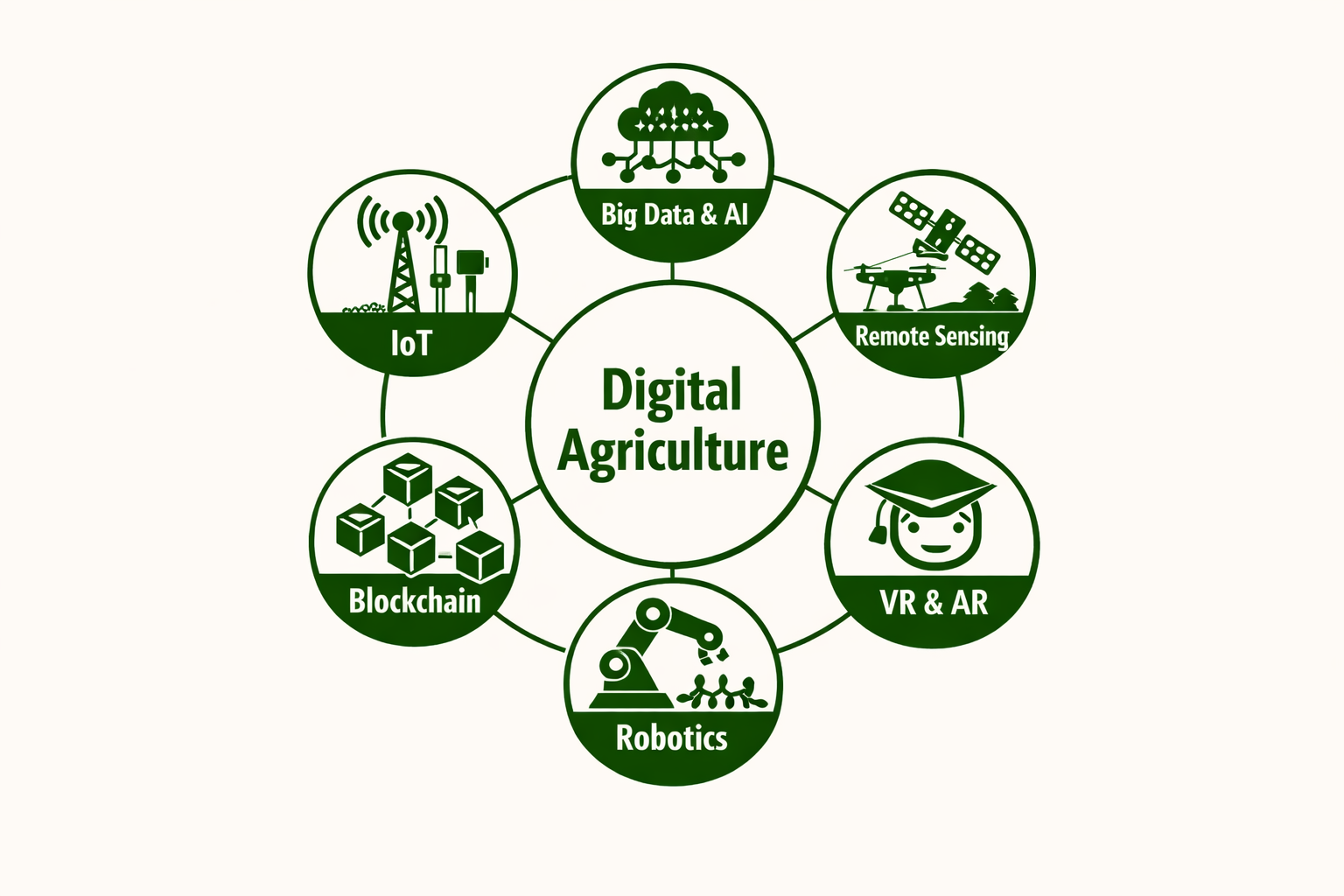
Farmers can identify and explain different types of digital tools:
· Internet of Things (IoT) — sensors that collect data on soil moisture, temperature or livestock health. They help farmers adjust practices quickly. “Networked sensors and devices that collect data on soil moisture, temperature, livestock health and more.”
· Big Data & Artificial Intelligence (AI) — large datasets and algorithms that analyse weather patterns, prices and pest risks.
· Remote sensing — satellite images and drones that monitor vegetation and soil conditions.
· Blockchain & traceability — systems that verify transactions and trace product origin.
· Robotics & automation — machines that perform repetitive tasks such as weeding or sampling.
· Augmented/virtual reality — tools that simulate real situations for training and planning.
3. The “Triple D” factors for adoption
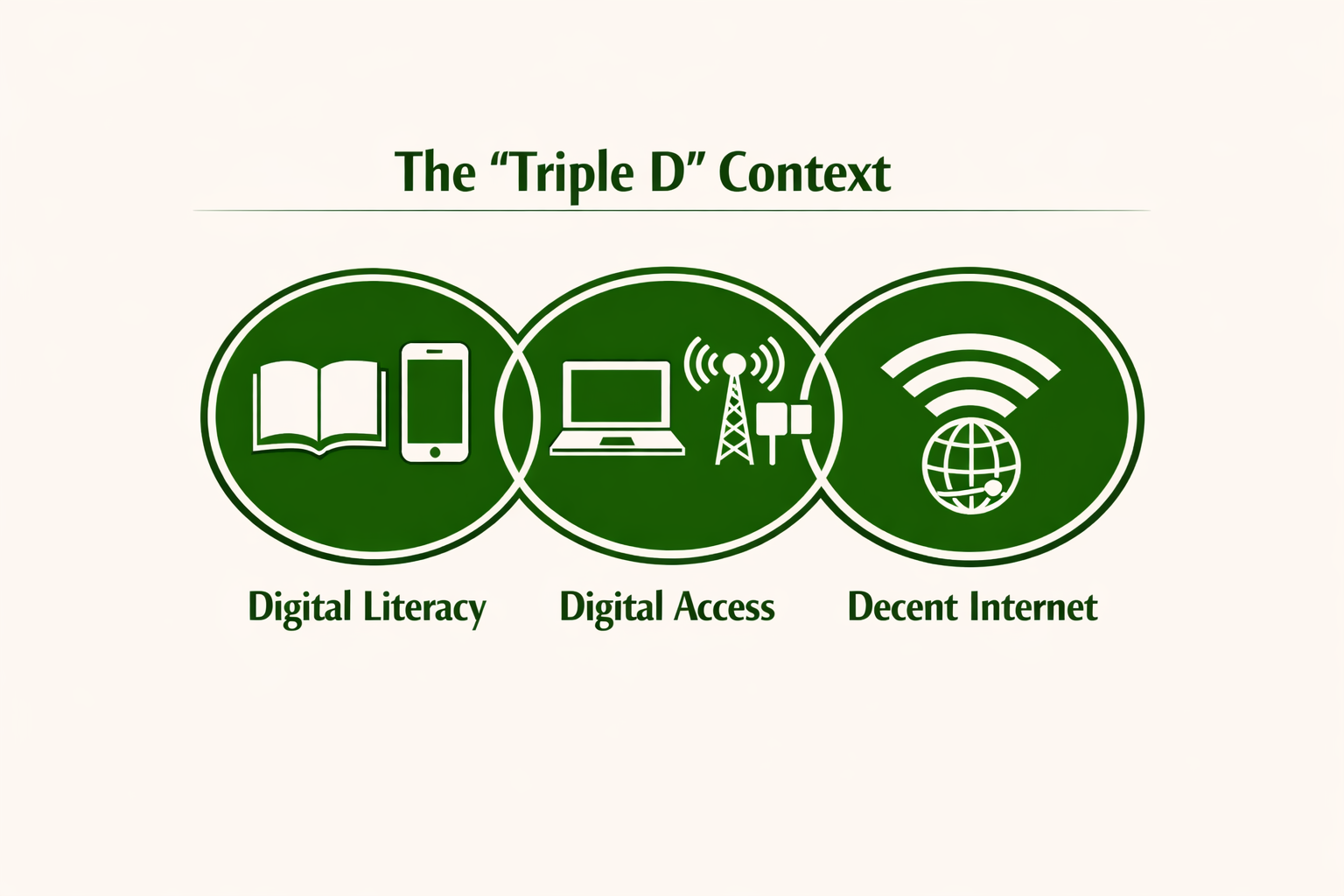
Farmers’ ability to use, access and benefit from digital tools depends on:
· Digital literacy — ability to use devices, apps and online services. “Farmers’ ability to use devices, apps and online services.”
· Digital access — availability of hardware and connectivity.
· Decent internet — reliable and fast connection that supports digital tools.
Understanding these factors helps practitioners adapt tools to local needs.