Curriculum
Smart4Food MicroLearning Course
INTRODUCTION
0/1
Module 1: Digital Tools for Smart Farming
0/22
Module 2: Sustainable and Regenerative Agriculture: Soil, Water and Biodiversity Management for Small-Scale Farms
0/16
-
MODULE 2 - INFORMATION
 Trial
-
MODULE 2 - INTRODUCTION
Trial
-
UNIT 1 - WHY REGENERATIVE FARMING MATTERS
Trial
-
UNIT 1 - REFLECTION ACTIVITY
Trial
-
UNIT 1 - QUIZ
 Trial
-
UNIT 2 - SOIL HEALTH BASICS
Trial
-
UNIT 2 - QUIZ
Trial
-
UNIT 3 - WATER MANAGEMENT
Trial
-
UNIT 3 - REFLECTION ACTIVITY
Trial
-
UNIT 3 - QUIZ
Trial
-
UNIT 4 - BIODIVERSITY ENHANCEMENT
Trial
-
UNIT 4 - REFLECTION ACTIVITY
Trial
-
UNIT 4 - QUIZ
Trial
-
UNIT 5 - CIRCULAR FARMING
Trial
-
UNIT 5 - REFLECTION ACTIVITY
Trial
-
UNIT 5 - QUIZ
Trial
Module 3 - Smart Marketing and Communication for Small Producers
0/27
Module 4 - Local Food Systems and Short Supply Chains
0/14
Module 5 - Training and Education for Rural Development
0/14
Module 6 - Policy Innovation and Project development in the Agrisector
0/15
UNIT 4 – BIODIVERSITY ENHANCEMENT
1. What biodiversity means
Biodiversity means having many different plants, animals, insects, and microorganisms in one area.
On farms, biodiversity enhancement means increasing the variety of life to create a healthier, more balanced system.
Learners can identify that:
Monoculture (one crop only) weakens soil and increases pests
Diverse crops and natural areas make farms stronger and more resilient
2. Why biodiversity matters
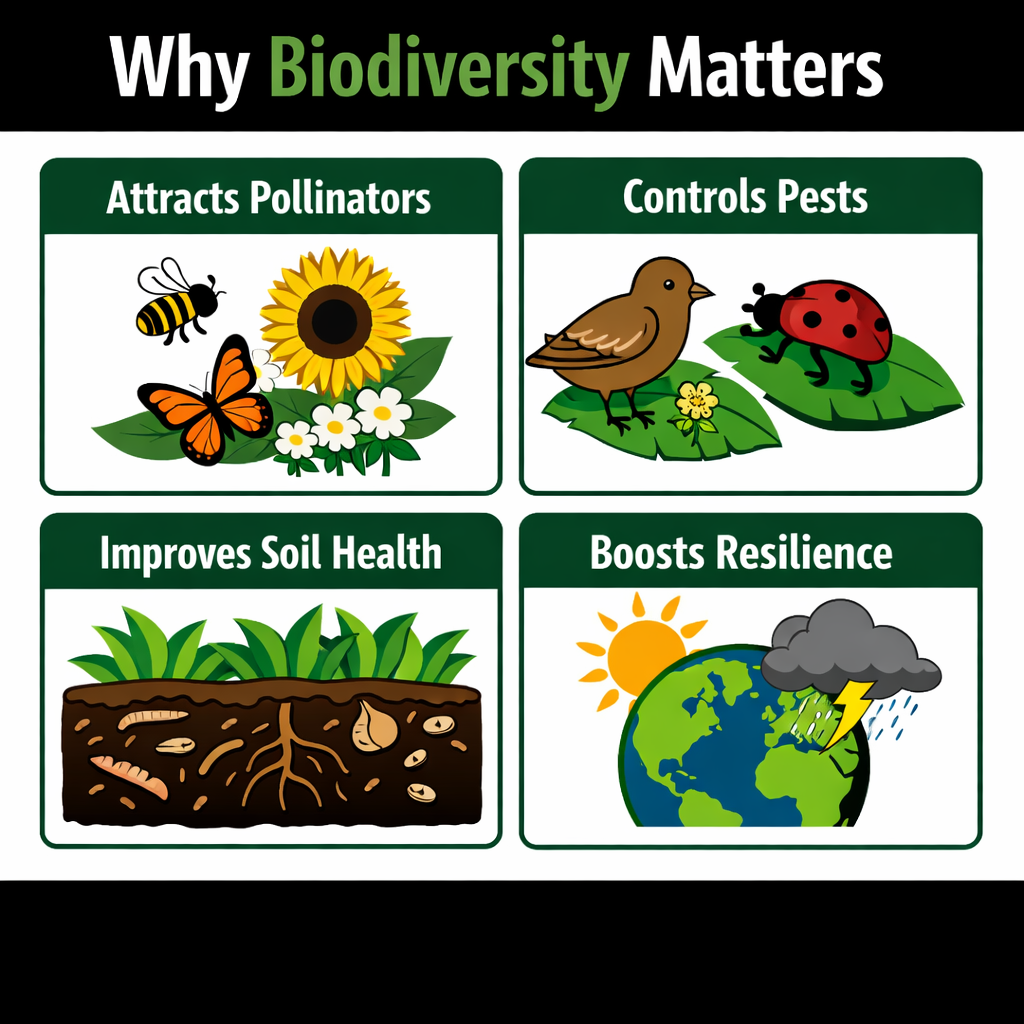
Biodiversity supports farming in several important ways. Learners can explain that it:
Attracts pollinators (bees, butterflies) that help plants produce fruits and seeds
Supports natural predators (birds, ladybugs) that reduce harmful insects
Improves soil health by supporting different soil organisms
Strengthens resilience to climate change and extreme weather
3. Hedgerows & field margins
Hedgerows are lines of bushes or trees along field edges.
Field margins are small natural areas at the borders of farms.
Learners can describe that these areas:
Provide shelter and food for birds, insects, and small animals
Act as wildlife corridors, helping animals move safely
Reduce wind and prevent soil erosion
Create a more balanced farm ecosystem
4. Pollinator habitats with native flowering plants
Pollinator habitats are areas planted with native flowers that attract bees, butterflies, and other pollinators.
Learners can analyse that:
Native plants grow well in local conditions
Pollinators increase fruit and seed production
Flower strips support biodiversity and improve yields naturally