Curriculum
Smart4Food MicroLearning Course
INTRODUCTION
0/1
Module 1: Digital Tools for Smart Farming
0/22
Module 2: Sustainable and Regenerative Agriculture: Soil, Water and Biodiversity Management for Small-Scale Farms
0/16
-
MODULE 2 - INFORMATION
 Trial
-
MODULE 2 - INTRODUCTION
Trial
-
UNIT 1 - WHY REGENERATIVE FARMING MATTERS
Trial
-
UNIT 1 - REFLECTION ACTIVITY
Trial
-
UNIT 1 - QUIZ
 Trial
-
UNIT 2 - SOIL HEALTH BASICS
Trial
-
UNIT 2 - QUIZ
Trial
-
UNIT 3 - WATER MANAGEMENT
Trial
-
UNIT 3 - REFLECTION ACTIVITY
Trial
-
UNIT 3 - QUIZ
Trial
-
UNIT 4 - BIODIVERSITY ENHANCEMENT
Trial
-
UNIT 4 - REFLECTION ACTIVITY
Trial
-
UNIT 4 - QUIZ
Trial
-
UNIT 5 - CIRCULAR FARMING
Trial
-
UNIT 5 - REFLECTION ACTIVITY
Trial
-
UNIT 5 - QUIZ
Trial
Module 3 - Smart Marketing and Communication for Small Producers
0/27
Module 4 - Local Food Systems and Short Supply Chains
0/14
Module 5 - Training and Education for Rural Development
0/14
Module 6 - Policy Innovation and Project development in the Agrisector
0/15
UNIT 3 – WATER MANAGEMENT
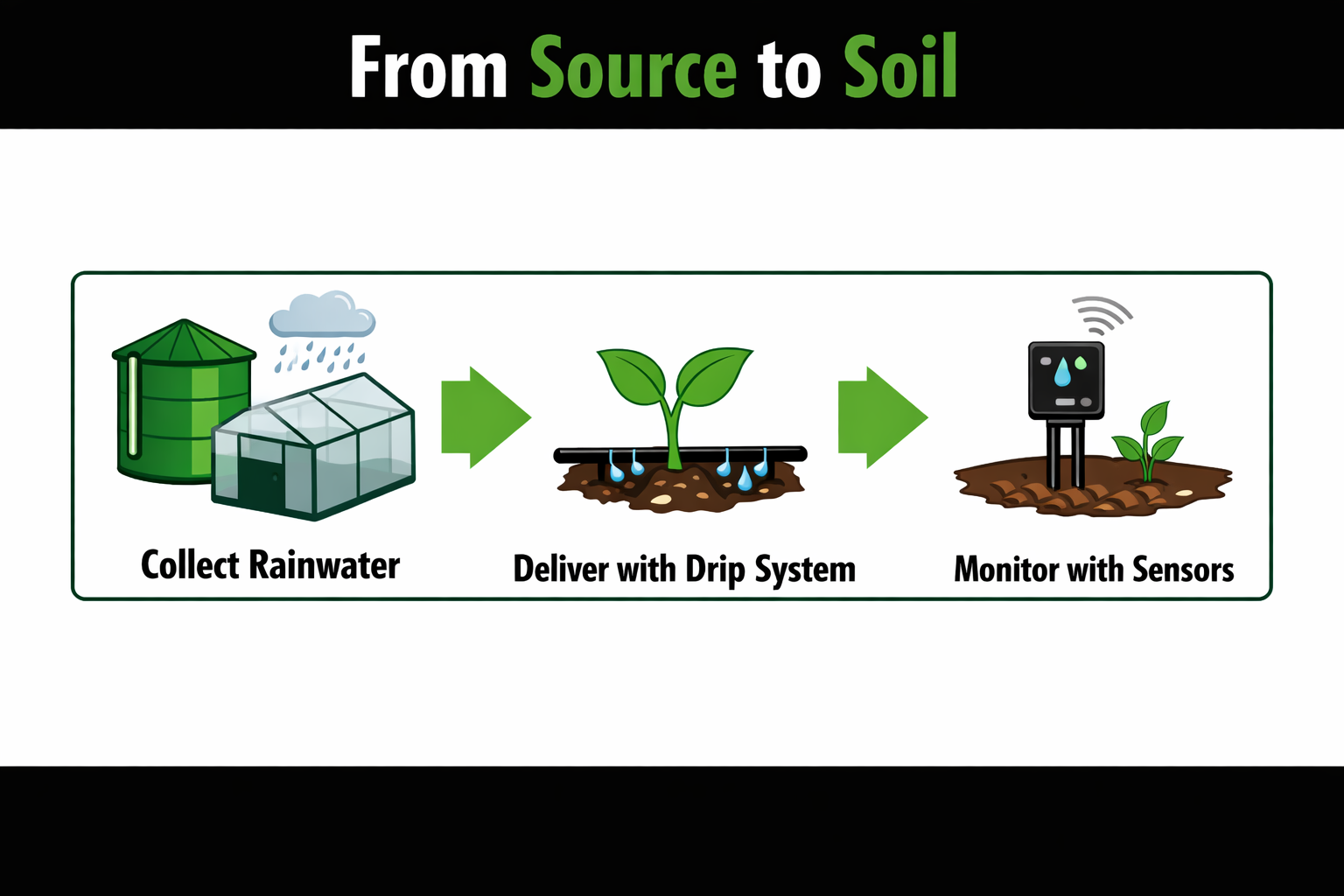
- Rainwater harvesting
Rainwater harvesting means collecting and storing rainwater for later use.
Farmers can use:
Water tanks to collect water from roofs or greenhouses
Contour bunds (small soil barriers) on slopes to slow water and help it enter the soil
Learners can explain that rainwater harvesting:
Reduces groundwater use
Supports farms during dry seasons
Prevents soil erosion by slowing water flow
2. Drip irrigation
Drip irrigation gives water directly to plant roots through small pipes and holes.
Water comes out slowly, drop by drop.
Learners can describe that drip irrigation:
Reduces water waste
Prevents evaporation
Avoids watering empty areas
Saves water and costs
3. Water-saving scheduling
Water-saving scheduling means irrigating only when needed.
Farmers can:
Water early morning or evening to reduce evaporation
Plan irrigation based on plant needs
Some farmers use soil moisture sensors to measure how much water is in the soil.
Learners can analyse that sensors:
Prevent unnecessary irrigation
Protect plant roots
Reduce energy and water use
Unit Takeaway:
This unit helps learners identify key water-saving methods, describe how each technique works, and explain how smart irrigation reduces waste. It prepares them to apply practical water-management strategies on small farms.