Curriculum
Smart4Food MicroLearning Course
INTRODUCTION
0/1
Module 1: Digital Tools for Smart Farming
0/22
-
MODULE 1 - INFORMATION
 Trial
-
MODULE 1 - INTRODUCTION
Trial
-
UNIT 1 - INTRODUCTION TO DIGITAL AGRICULTURE AND SMART FARMING TOOLS
Trial
-
UNIT 1 - QUIZ
 Trial
-
UNIT 1 - REFLECTION ACTIVITY
Trial
-
UNIT 2 - DIGITAL RECORD-KEEPING FOR FARM MANAGEMENT
Trial
-
UNIT 2 - REFLECTION ACTIVITY
Trial
-
UNIT 2 - QUIZ
Trial
-
UNIT 3 - REMOTE SENSING AND GEOSPATIAL ANALYSIS
Trial
-
UNIT 3 - IMAGE ACTIVITY: DESCRIBING NDVI PATTERNS
Trial
-
UNIT 3 - QUIZ
Trial
-
UNIT 4 – IoT SENSORS AND SMART IRRIGATION
Trial
-
UNIT 4 - SIMULATED DASHBOARD ACTIVITY
Trial
-
UNIT 4 - QUIZ
Trial
-
UNIT 5 – ARTIFICIAL INTELLIGENCE AND DATA ANALYTICS
Trial
-
UNIT 5 - WEATHER FORECAST ACTIVITY
Trial
-
UNIT 5 - QUALITATIVE COMPARISON ACTIVITY
Trial
-
UNIT 5 - QUIZ
Trial
-
UNIT 6 - DATA ETHICS, CYBERSECURITY AND SUSTAINABILITY
Trial
-
UNIT 6 - READING ACTIVITY
Trial
-
UNIT 6 - CASE SCENARIO ACTIVITY
Trial
-
UNIT 6 - QUIZ
Trial
Module 2: Sustainable and Regenerative Agriculture: Soil, Water and Biodiversity Management for Small-Scale Farms
0/16
Module 3 - Smart Marketing and Communication for Small Producers
0/27
Module 4 - Local Food Systems and Short Supply Chains
0/14
Module 5 - Training and Education for Rural Development
0/14
Module 6 - Policy Innovation and Project development in the Agrisector
0/15
UNIT 4 – IoT SENSORS AND SMART IRRIGATION
Unit 4 – IoT Sensors & Smart Irrigation
Duration: 8–10 minutes
1. What IoT sensors are in farming
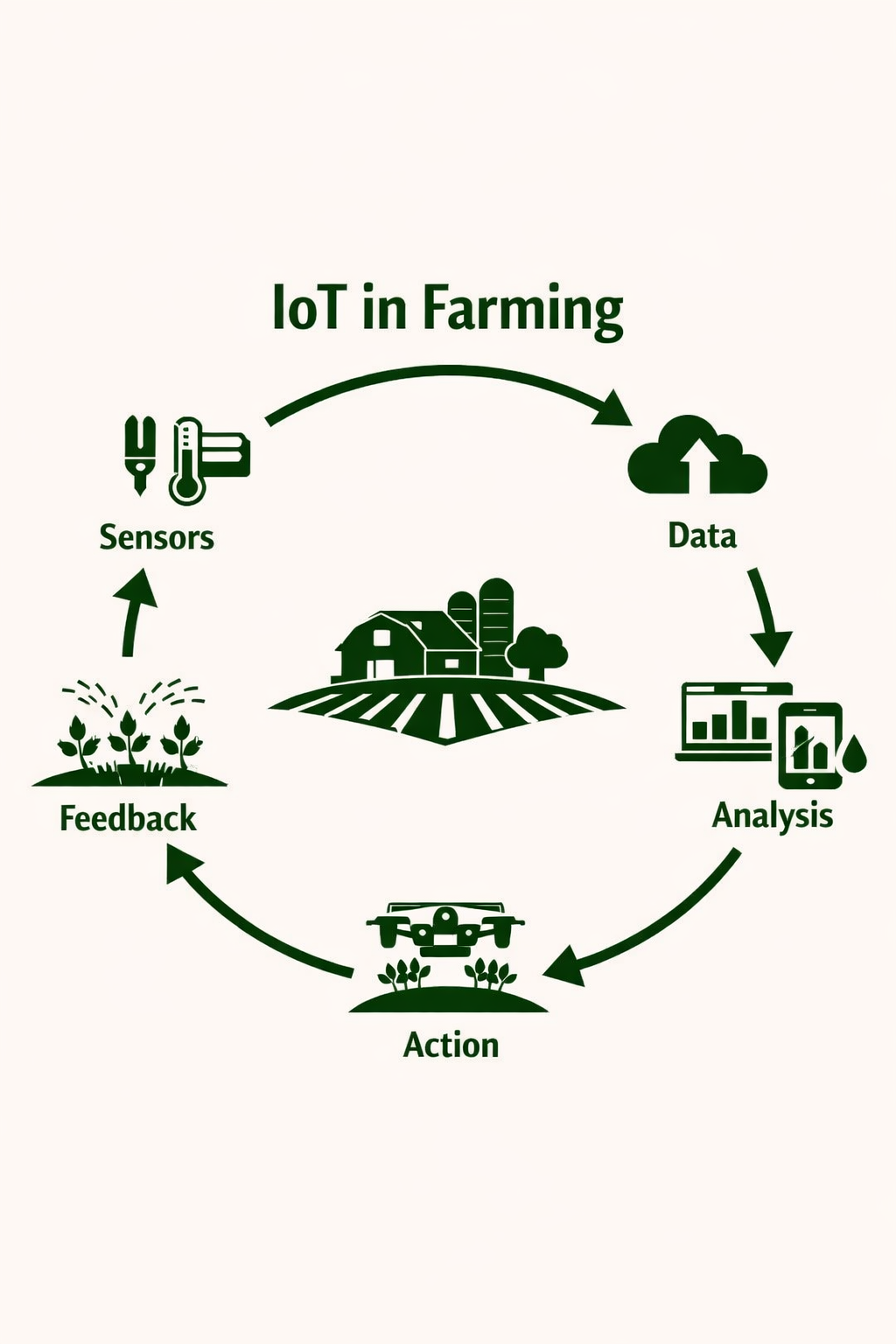
IoT refers to interconnected devices that collect and share data. In farming, IoT sensors help farmers identify, describe, and monitor real‑time field conditions.
Farmers typically use:
· Soil moisture probes
· Weather stations
· Temperature and humidity sensors
These devices measure key variables such as soil moisture, temperature, humidity and light. The data are sent to a phone app or online dashboard where farmers can explain what is happening and apply decisions based on evidence.
2. How IoT supports smart irrigation
IoT sensors give farmers real‑time feedback on water needs.
Sensors help farmers:
· Determine when to irrigate
· Decide how much water to apply
· Analyse patterns of soil moisture over time
This leads to:
· Reduced water use
· Prevention of over‑watering
· Better environmental protection
3. Automation for efficiency
Some systems can automatically adjust irrigation schedules based on sensor readings.
This allows farmers to:
· Save time
· Focus on other tasks
· Apply more precise water management