Curriculum
Smart4Food MicroLearning Course
INTRODUCTION
0/1
Module 1: Digital Tools for Smart Farming
0/22
Module 2: Sustainable and Regenerative Agriculture: Soil, Water and Biodiversity Management for Small-Scale Farms
0/16
Module 3 - Smart Marketing and Communication for Small Producers
0/27
Module 4 - Local Food Systems and Short Supply Chains
0/14
-
MODULE 4 — INFORMATION
 Trial
-
MODULE 4 — CORE CONCEPT
Trial
-
UNIT 1 — What are Local Food Systems
Trial
-
UNIT 1 — REFLECTION ACTIVITY
Trial
-
UNIT 1 — QUIZ
 Trial
-
UNIT 2 — Typologies of Short Food Supply Chains (SFSCs)
Trial
-
UNIT 2 — REFLECTION ACTIVITY
Trial
-
UNIT 2 — QUIZ
Trial
-
UNIT 3 — Building Local Partnerships and Cooperatives
Trial
-
UNIT 3 — REFLECTION ACTIVITY
Trial
-
UNIT 3 — QUIZ
Trial
-
UNIT 4 — Planning a Localized Food Distribution Strategy
Trial
-
UNIT 4 — REFLECTION ACTIVITY
Trial
-
UNIT 4 — QUIZ
Trial
Module 5 - Training and Education for Rural Development
0/14
Module 6 - Policy Innovation and Project development in the Agrisector
0/15
UNIT 1 — What are Local Food Systems
A Local Food System (LFS) is a territorially defined network that includes all stages of food-related activity: production, transformation, distribution, consumption, and waste management within a specific geographical boundary.
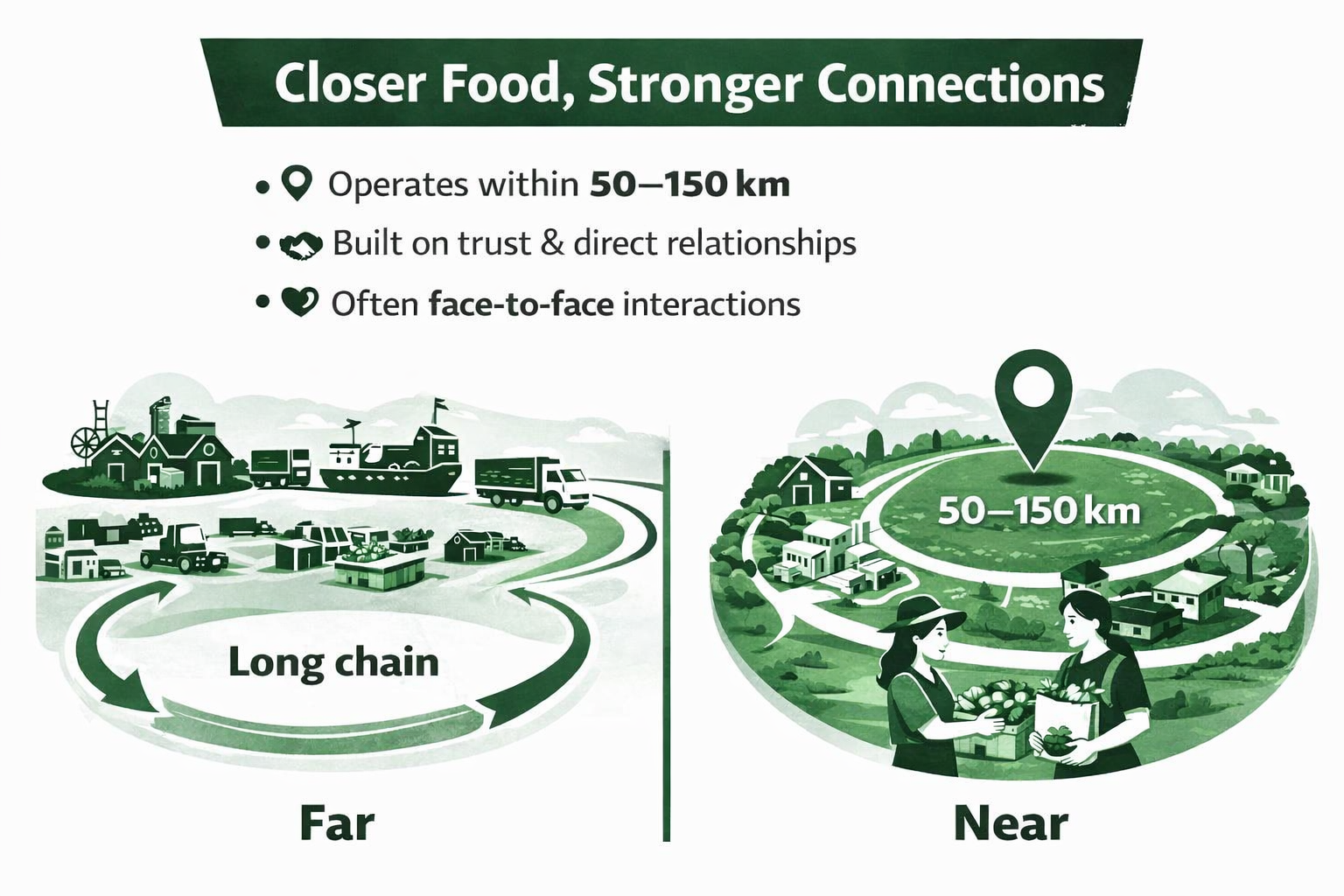
Its main purpose is to reduce the physical, economic, and social distance between producers and consumers. LFS typically operate within 50–150 km, but what truly defines them is relational proximity: trust-based, often face-to-face interaction among farmers, processors, retailers, and consumers.
These relationships increase transparency and strengthen accountability. LFS are also embedded in local culture and identity. Food becomes a cultural artefact shaped by traditions and local knowledge. Initiatives that promote LFS include the Common Agricultural Policy and the Farm to Fork Strategy.
Local food systems differ from global food systems. Global food systems are usually based on long supply chains and industrial agriculture. They can create high greenhouse gas emissions from transportation and may contribute to soil degradation and biodiversity loss. Economically, they benefit from scale, but they often reduce the share of value captured by farmers.
Local food systems operate within a defined territory and use short supply chains. This can reduce transport emissions and support agroecological practices. Producers often apply soil-friendly and biodiversity-enhancing methods because their livelihoods depend on local ecosystems. Socially, LFS promote community cohesion, trust-based exchanges, and consumer awareness.
LFS also support rural sustainability by encouraging land management practices adapted to local ecosystems. Producers often use low-input or organic methods that protect soil, water, and biodiversity. Economically, direct sales and short supply chains increase the income share retained by producers and reduce dependency on volatile global markets. This is especially important in remote or mountainous areas.
Socially, LFS act as community infrastructures. Cooperatives, Local Action Groups (LAGs), food hubs, and solidarity purchasing groups create spaces for shared decision-making and social innovation. These systems strengthen trust and community ties.
Food miles measure the distance food travels from production to consumption. LFS reduce food miles through proximity-based distribution, lowering emissions and increasing freshness. Circular economy practices in LFS include composting, reusing by-products, and sharing logistics. These practices reduce dependency on external inputs, close nutrient loops, and enhance the self-reliance of rural economies.
Territorial identity connects food to place. Local food systems preserve culinary heritage, traditional knowledge, and landscape-linked production. Products such as cheeses, grains, or oils can become symbols of local distinctiveness.
Food sovereignty emphasises the right of communities to shape their own food systems. It prioritises ecological production, local economies, and democratic control. LFS embody this idea because they allow communities to decide how food is produced, who benefits, and how resources are managed.
Optional learning resource from the source material: From farm to fork video — https://www.youtube.com/watch?v=HuocF3EhYjU