Curriculum
Smart4Food MicroLearning Course
INTRODUCTION
0/1
Module 1: Digital Tools for Smart Farming
0/22
Module 2: Sustainable and Regenerative Agriculture: Soil, Water and Biodiversity Management for Small-Scale Farms
0/16
Module 3 - Smart Marketing and Communication for Small Producers
0/27
Module 4 - Local Food Systems and Short Supply Chains
0/14
Module 5 - Training and Education for Rural Development
0/14
-
MODULE 5 — INFORMATION
 Trial
-
MODULE 5 — CORE CONCEPT
Trial
-
UNIT 1 — UNDERSTANDING RURAL LEARNER PROFILES AND CHALLENGES
Trial
-
UNIT 1 — REFLECTION ACTIVITY
Trial
-
UNIT 1 — QUIZ
 Trial
-
UNIT 2 — MICROLEARNING DESIGN PRINCIPLES FOR RURAL EDUCATION
Trial
-
UNIT 2 — REFLECTION ACTIVITY
Trial
-
UNIT 2 — QUIZ
Trial
-
UNIT 3 — ENGAGEMENT TECHNIQUES: VISUAL, TACTILE, NARRATIVE
Trial
-
UNIT 3 — REFLECTION ACTIVITY
Trial
-
UNIT 3 — QUIZ
Trial
-
UNIT 4 — FEEDBACK TOOLS AND REFLECTIVE PRACTICES
Trial
-
UNIT 4 — REFLECTION ACTIVITY
Trial
-
UNIT 4 — QUIZ
Trial
Module 6 - Policy Innovation and Project development in the Agrisector
0/15
UNIT 2 — MICROLEARNING DESIGN PRINCIPLES FOR RURAL EDUCATION
Microlearning: key characteristics
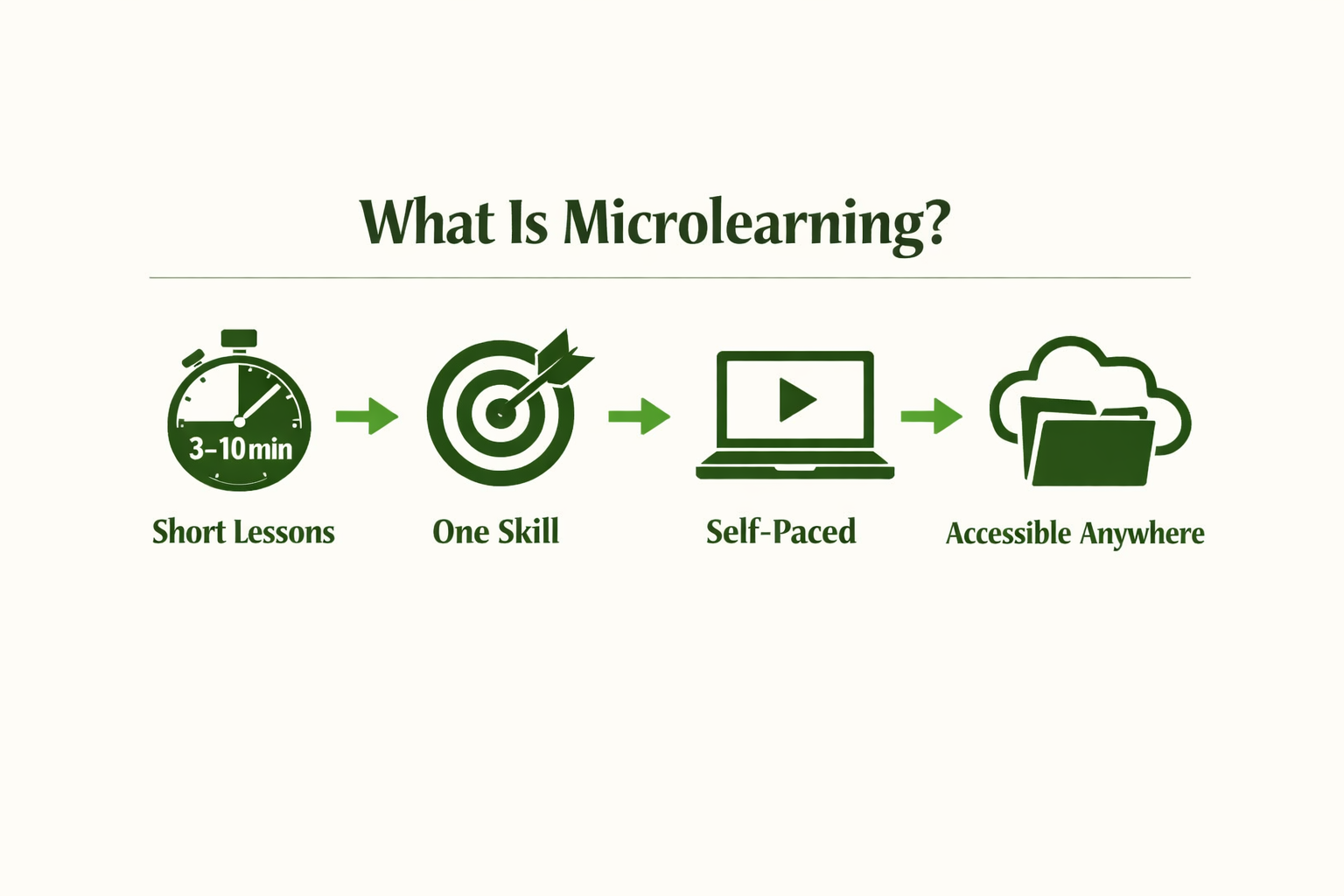
Microlearning is a way of learning through short, focused lessons. Instead of long courses or heavy reading, learners progress in small steps that take only a few minutes to complete.
With microlearning, learners can expect:
· Short lessons that last 3–10 minutes.
· Each lesson focusing on one clear topic or skill.
· The freedom to learn at their own pace.
· Easy access to lessons whenever they need them.
Each microlearning lesson should be clear, practical, and easy to follow. Lessons include:
· Clear learning goals, so learners know what they will learn.
· Information presented in small, simple steps.
· No unnecessary details or overload.
· Access on different devices, including mobile phones.
To keep learning interesting and practical, different formats can be used:
· Short videos.
· Simple infographics.
· Quick quizzes.
· Short audio explanations or demonstrations.
Microlearning fits well with busy rural and agricultural work schedules because it allows learners to:
· Learn during short breaks in the day.
· Use less internet data, even with weaker connections.
· Learn through visual and practical examples.
· Stay motivated and remember information more easily.
This unit helps educators design learning that fits daily work and real needs. Learners benefit from practical knowledge they can use immediately, flexible learning that fits around farm work, support for sustainable practices and digital skills, and opportunities for continuous learning in rural life.